How to Order at a Korean Bunsik Shop: Tteokbokki, Sundae, Twigim & Eomuk
A Korean bunsik shop can look a little confusing if it is your first time.
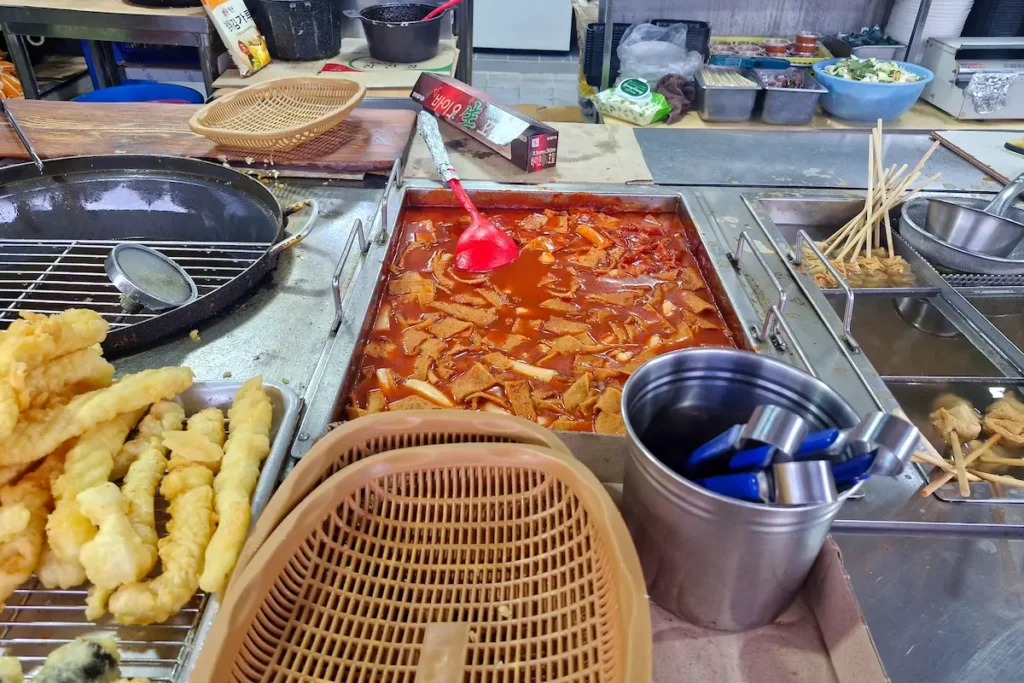
There may be a large tray of bubbling tteokbokki, fish cake skewers sitting in hot broth, piles of fried food, paper cups, soy sauce, and people helping themselves to things without asking first.
For Koreans, much of this feels automatic. You order some foods from the staff, choose others yourself, keep your fish cake skewers until the end, and often pay after eating.
But once you understand a few basic rules, a bunsik shop is one of the easiest and most casual places to eat in Korea.
Quick Answer — How do you order at a Korean bunsik shop?
GOOD TO KNOW
For dishes such as tteokbokki and sundae, you can usually order by the serving: “Tteokbokki, one serving please.” Fried foods may be ordered by name and number or selected yourself with a basket, depending on the shop. Eomuk is often self-service — take a skewer, eat it, and keep the empty stick so the staff can count it when you pay.
What Is a Bunsik Shop?
Bunsik (분식) refers to a casual style of inexpensive Korean food that includes familiar dishes such as tteokbokki, sundae, twigim, eomuk, ramyeon, and sometimes kimbap.
Some bunsik restaurants have tables and printed menus. Others feel closer to a street-food counter, with much of the food already cooked and displayed in front of you.
The shop we visited was the second type.
Tteokbokki was sitting in a large tray of red sauce, eomuk skewers were kept warm in broth, and different kinds of twigim were displayed where customers could see and choose them.
The exact system varies by shop, but there are a few patterns that are useful to recognize.
Ordering Tteokbokki: Ask for One Serving
Tteokbokki is usually one of the easiest things to order.
You can simply say:
떡볶이 1인분 주세요.
Tteokbokki il-inbun juseyo.
“One serving of tteokbokki, please.”
Il-inbun (1인분) means one serving or one portion.
Tteokbokki is made with chewy rice cakes cooked in a red sauce, usually with fish cake and other ingredients.
The flavor is typically a combination of spicy, sweet, and savory, although the heat level can vary quite a bit from one shop to another.
If the tteokbokki looks very red, I would not assume that it is mild. For someone who does not eat spicy food often, it is better to start slowly.
One of my favorite combinations is eating tteokbokki with fried foods. The crisp batter tastes especially good with some of the tteokbokki sauce on it.
Ordering Sundae: You May Be Asked About the Offal
Korean sundae (순대, sometimes written soondae) is completely different from an ice cream sundae.
It is a Korean sausage, commonly filled with glass noodles and other ingredients, with a soft and slightly chewy texture.
To order it, you can say:
순대 1인분 주세요.
Sundae il-inbun juseyo.
“One serving of sundae, please.”
The flavor of sundae itself is relatively mild and savory, especially compared with spicy tteokbokki.
There is one question first-time visitors may not expect.
The staff may ask whether you want naejang (내장) mixed in with your sundae.
This refers to assorted offal that is often served alongside sliced sundae. If you like it, you can ask for it to be included. If not, it is perfectly fine to ask for sundae only.
You can say:
내장 섞어 주세요.
Naejang seokkeo juseyo.
“Please include the offal.”
Or:
내장은 빼 주세요.
Naejangeun ppae juseyo.
“No offal, please.”
Not every bunsik shop serves sundae in exactly the same way, so do not worry if nobody asks.
How to Order Twigim
Twigim (튀김) is Korean fried food, and the ordering system seems to vary more from shop to shop.
At some places, you simply tell the staff what you want and how many pieces.
For example:
김말이 두 개, 오징어튀김 두 개 주세요.
“Two gimmari and two squid twigim, please.”
At other shops, there may be a basket or tongs nearby. You choose the fried items yourself, put them in the basket, and hand it to the staff.
So if you see other customers choosing their own twigim, it is usually a good clue that you can do the same.
Common choices can include gimmari, squid, vegetables, sweet potato, dumplings, and other fried items, although every shop has a different selection.
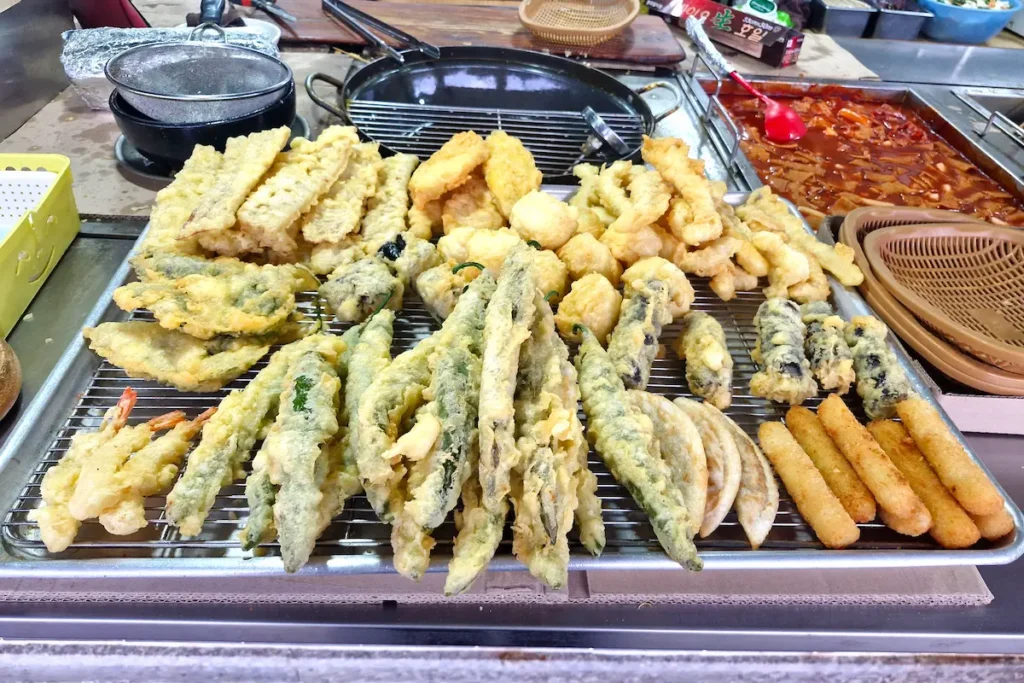
Freshly fried twigim is crisp on the outside and soft or chewy inside depending on the filling.
Gimmari, which has glass noodles wrapped in seaweed under the batter, is particularly good with tteokbokki sauce.
Korea Byways Tip
There is no single twigim ordering system. Look at what the customers ahead of you are doing. If they are choosing pieces with tongs or a basket, follow their lead. If the food is behind the counter, order by name and number.
Eomuk Is Often Self-Service
Eomuk (어묵) is another food that can confuse first-time visitors because you may not need to formally order it at all.
You may also hear Koreans casually call it odeng (오뎅).
At many traditional-style bunsik shops, the eomuk is kept in a container of hot broth with wooden skewers sticking out.
You simply take a skewer and eat it.
The fish cake is soft and springy, with a mild savory flavor, and it is especially comforting in cooler weather.
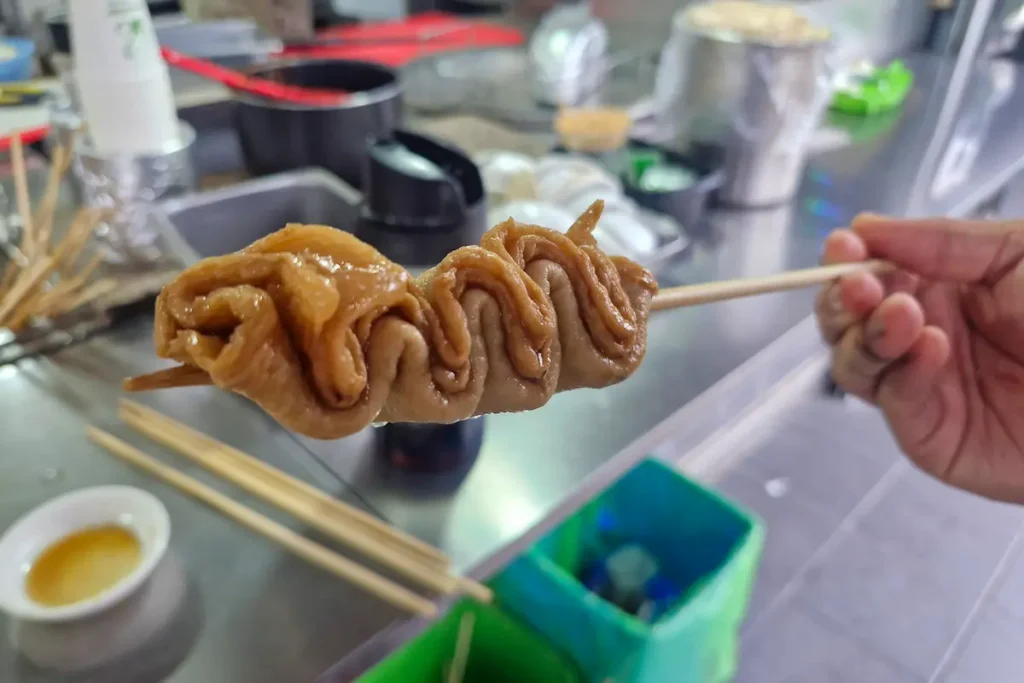
The important part comes after you finish eating:
Do not immediately throw away the wooden skewer.
Customers often keep the used skewers together, and the staff count them when calculating the bill.
At shops with different types or prices of eomuk, follow any signs or instructions you see, but keeping the sticks until you pay is a useful habit.
The Eomuk Broth Is Often There for You to Drink
Look around the eomuk area.
If you see paper cups and a ladle beside the eomuk, it often means customers can help themselves to the hot broth.
At the shop we visited, we simply took a paper cup and ladled the broth ourselves.
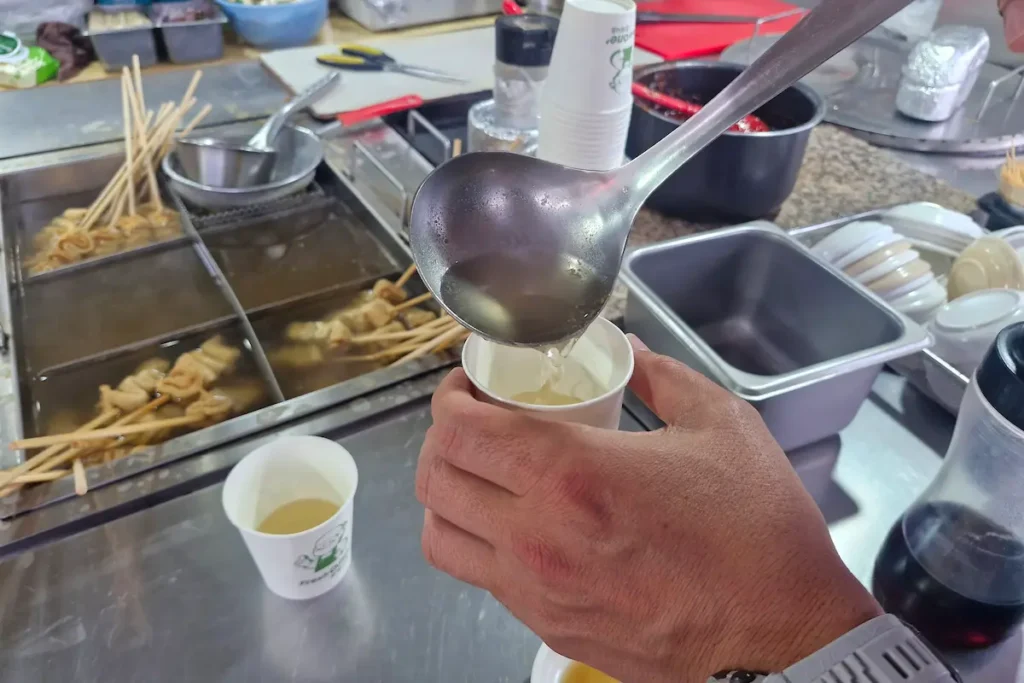
The broth is light, warm, and savory, and I especially like drinking it alongside spicy tteokbokki.
For someone who has just taken a very spicy bite, a warm cup of eomuk broth can also be a welcome break.
This is one of those small things that Koreans rarely need explained, but it is easy for an international visitor to miss if nobody tells you.
What About the Soy Sauce?
Another thing to look for near the eomuk is a bottle or container of soy sauce and small dipping dishes.
If they are set out where customers can reach them, they are usually there for self-service.
You can pour a small amount into one of the dishes and use it as a dipping sauce for eomuk or other foods.
You do not need much.
As with the broth, the exact setup varies from one shop to another, so I usually look at what has been placed within easy reach of customers.
Do You Pay Before or After Eating?
At the bunsik shop we visited, we ordered and ate first, then paid at the end. This is still common at many casual counter-style bunsik shops, but the system varies.
When you are ready to leave, the staff can calculate the dishes you ordered and count any eomuk skewers you have eaten.
You can simply say:
계산할게요.
Gyesanhalgeyo.
“I’d like to pay.”
However, this is not a universal rule.
Some bunsik shops, especially newer restaurants or places with kiosks, may ask you to pay when ordering.
If you are unsure, watch the person ahead of you or simply ask the staff.
Useful Korean Phrases for a Bunsik Shop
What you want to say | Korean |
One serving of tteokbokki, please. | 떡볶이 1인분 주세요. |
One serving of sundae, please. | 순대 1인분 주세요. |
Please include the offal. | 내장 섞어 주세요. |
No offal, please. | 내장은 빼 주세요. |
Two gimmari, please. | 김말이 두 개 주세요. |
Two squid twigim, please. | 오징어튀김 두 개 주세요. |
I’ll eat here. | 여기서 먹을게요. |
To go, please. | 포장이요. |
I’d like to pay. | 계산할게요. |
You do not need perfect Korean pronunciation. Pointing at the food and using a number is often enough at a casual bunsik shop.
What I Would Order for a First Visit
If it were my first bunsik experience, I would start with one serving of tteokbokki, a few pieces of twigim, and one eomuk skewer.
Those three together show several sides of bunsik at once.
The tteokbokki is chewy, spicy, and saucy. The twigim adds something crisp, and the eomuk is mild and savory.
If you are curious about something more distinctly Korean, add a serving of sundae as well.
And if you see paper cups next to the eomuk broth, do not forget to try a cup.
A Few Things First-Time Visitors Often Miss
The most useful thing to remember is that a bunsik shop can be partly self-service.
Not everything placed in front of you needs to be ordered from the staff.
You may choose your own twigim, take an eomuk skewer yourself, pour your own broth, and prepare your own soy sauce.
At the same time, not every shop follows exactly the same system.
That is why watching what local customers do for a few seconds is often more useful than trying to memorize a strict set of rules.
Final Thoughts
A Korean bunsik shop may look busy and slightly chaotic at first, but the system is usually very relaxed.
Order tteokbokki or sundae by the serving, choose your twigim in whatever way the shop uses, take an eomuk skewer if it is self-service, and keep the stick until you pay.
Look for paper cups near the broth and small dishes near the soy sauce.
Once you know those small details, the experience becomes much easier.
And that is part of what I like about bunsik: it is casual, inexpensive, and full of the kind of everyday Korean food that does not require a special occasion.
Share this story
KOREAN TABLE
TRAVEL ESSENTIALS