What to Eat at Kimbap Cheonguk: Kimbap, Rabokki & Jjolmyeon
Kimbap Cheonguk is the kind of casual Korean restaurant where you can sit down for a simple meal and choose from several familiar Korean dishes.
On this visit, we ordered tuna kimbap, pork cutlet kimbap, rabokki, and jjolmyeon. It was a good mix of foods we already enjoy as a family, and it also showed how different Korean casual dishes can be even when they are served at the same table.
For me, tuna kimbap is always a favorite. My son, on the other hand, prefers pork cutlet kimbap.
We also noticed something that may be useful for first-time visitors to Korea: at the location we visited, water and some side dishes were self-service.
Quick Answer — What should you eat at Kimbap Cheonguk?
GOOD TO KNOW
Kimbap is an easy place to start, especially if you want something simple to share. Rabokki is a good choice if you want something warm, saucy, and spicy, while jjolmyeon gives you chewy noodles with fresh vegetables and a spicy sauce. Ordering a few dishes together is an easy way to try different flavors and textures in one meal.
What Is Kimbap Cheonguk?
Kimbap Cheonguk (김밥천국) translates roughly as “Kimbap Heaven.”
It is the kind of casual restaurant where you can find familiar Korean everyday foods such as kimbap, noodles, rice dishes, and snack-style meals.
Rather than thinking of it as a special-occasion restaurant, it makes more sense to think of this type of place as somewhere you might stop for an easy lunch or dinner.
Menus and restaurant setups can vary, so the experience below is based on the location we personally visited.
1. Tuna Kimbap and Pork Cutlet Kimbap
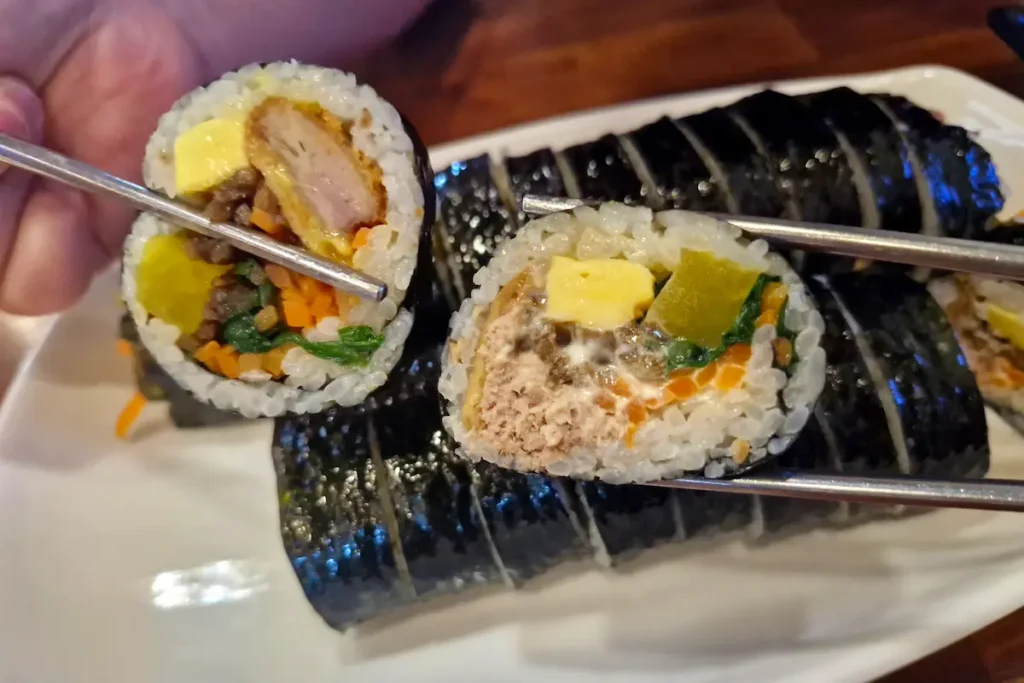
We ordered two kinds of kimbap: tuna kimbap and pork cutlet kimbap.
Tuna kimbap is my personal favorite. The tuna filling gives the roll a softer, richer texture alongside the rice, vegetables, egg, and pickled radish.
My son prefers pork cutlet kimbap. It has a piece of fried pork cutlet inside, so it feels a little more substantial than a basic vegetable kimbap.
That difference in preference is actually one reason we often order more than one kind.
Kimbap is easy to share, so everyone can try a few pieces and choose the version they like best.
For someone trying kimbap for the first time, basic kimbap is always an easy introduction, but tuna and pork cutlet are also approachable choices if you want something a little more filling.
2. Rabokki — Tteokbokki with Ramyeon Noodles
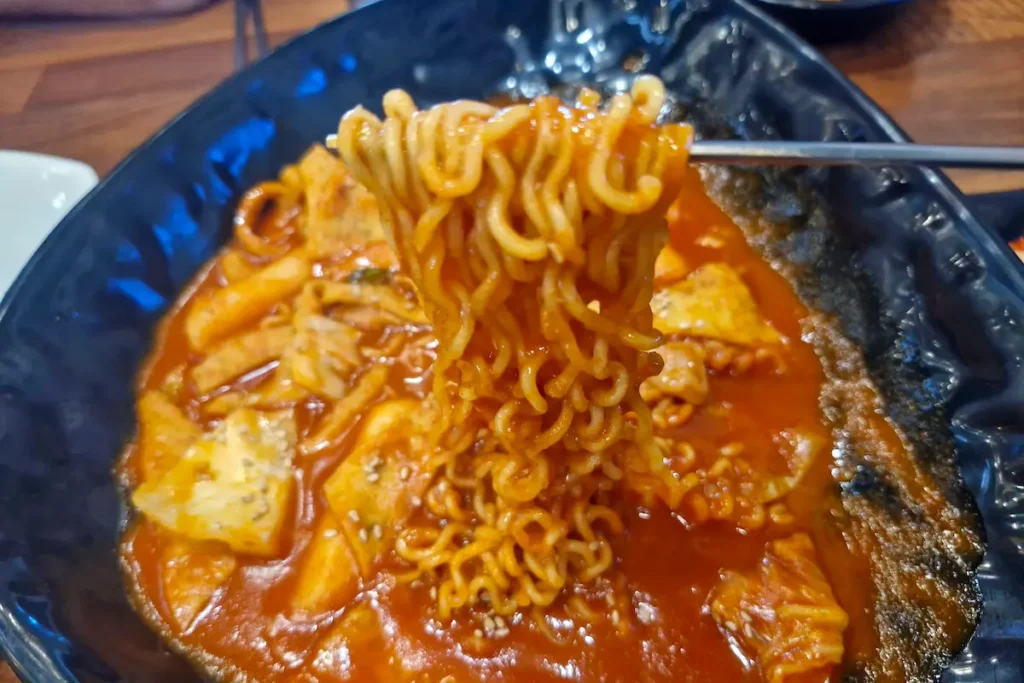
Rabokki combines two familiar Korean comfort foods: tteokbokki and ramyeon.
The bowl we ordered came with rice cakes, fish cake, and ramyeon noodles in a red sauce.
The ramyeon makes the dish feel more filling than regular tteokbokki, while the rice cakes add the chewy texture that tteokbokki is known for.
If you are sensitive to spicy food, this is one dish where I would expect some heat. Spice levels can vary from restaurant to restaurant, but rabokki is generally meant to have a noticeable kick.
It also works well as a dish to share, especially when you have kimbap alongside it.
3. Jjolmyeon — Chewy Noodles You Mix Before Eating
Jjolmyeon feels completely different from rabokki.
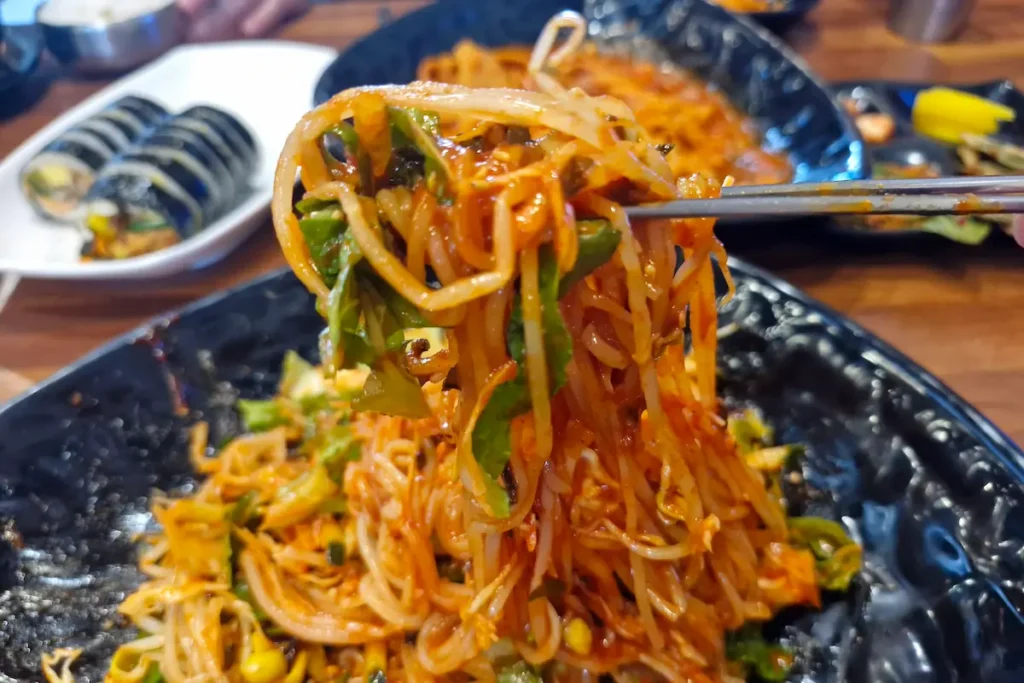
Unlike rabokki, jjolmyeon is served with chewy noodles, fresh vegetables, and a spicy red sauce that you mix together before eating.
Our bowl arrived with the vegetables arranged over the noodles. Once everything was mixed, the noodles became coated in the red sauce.
The defining feature is the texture.
Jjolmyeon noodles are known for being firm and chewy, and that springy texture is a big part of the dish.
The fresh vegetables also give it a completely different feel from the warmer, heavier rabokki.
Water and Side Dishes Were Self-Service
One of the most useful things for a first-time visitor to know is that you may need to help yourself to a few things.
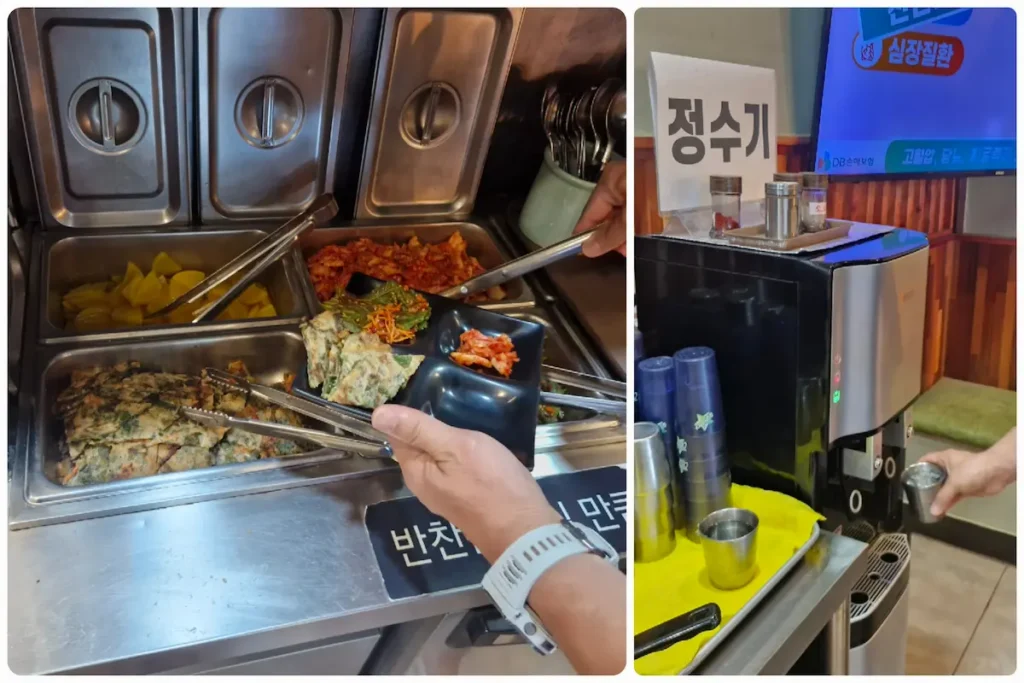
At the restaurant we visited, water was self-service. Cups were stacked near the water dispenser, and customers filled their own cups.
There was also a self-service banchan station.
We could take small amounts of side dishes such as kimchi, pickled radish, jeon, and seasoned vegetables instead of waiting for a server to bring them.
This kind of setup is easy once you know what is happening, but it can be confusing if you are visiting Korea for the first time and waiting at the table for water or side dishes.
Korea Byways Tip
If you do not see water on the table, look around the restaurant for a water dispenser and stacked cups. At casual Korean restaurants, water may sometimes be self-service.
What About the Banchan?
Banchan are the small side dishes served with many Korean meals.
The exact dishes depend on the restaurant. At this location, some were available at a self-service station where customers could take what they needed.
A good approach is to start with a small amount and go back for more if necessary rather than taking too much at once.
Banchan is a much bigger topic than it first appears — including when refills are okay, why restaurants serve side dishes without being ordered, and how Koreans usually eat them — so I plan to cover that separately in a future guide.
What I’d Order for a First Visit
For a first visit, I would definitely include kimbap.
My favorite is tuna kimbap, while my son usually chooses pork cutlet kimbap, so ordering two different rolls works well for us.
Then I would add either rabokki or jjolmyeon depending on what kind of meal you want.
Choose rabokki if you want something warm, saucy, and filling.
Choose jjolmyeon if you are curious about chewy Korean noodles and want something with plenty of fresh vegetables.
Ordering several dishes together gave us a nice mix of textures and flavors at one table.
What First-Time Visitors Should Know
Kimbap Cheonguk is not the kind of restaurant where you need a complicated plan.
Go in, look through the menu, choose a few dishes that appeal to you, and pay attention to whether things like water and banchan are self-service.
The experience is casual, and that is part of its appeal.
For international travelers, places like this are also a useful way to see the kind of food that fits naturally into everyday life in Korea rather than only trying dishes associated with famous restaurants or tourist areas.
Final Thoughts
Our meal of tuna kimbap, pork cutlet kimbap, rabokki, and jjolmyeon was simple, but it showed several different sides of casual Korean food on the same table.
Tuna kimbap was my favorite, while my son preferred the pork cutlet version. Rabokki brought the warm, saucy side of Korean snack food, and jjolmyeon added a completely different chewy noodle texture.
The self-service water and banchan area was also a good reminder that sometimes the most useful Korea travel information is not just what to order, but knowing how the restaurant works once you walk inside.
Share this story
KOREAN TABLE
TRAVEL ESSENTIALS